
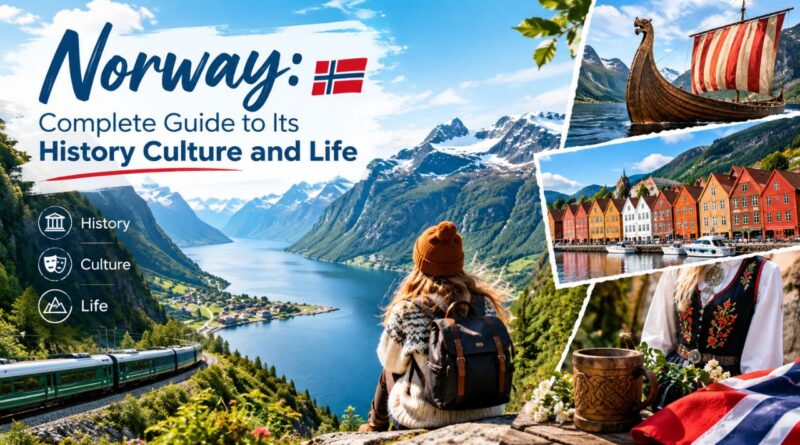
Norway: Complete Guide to Its History Culture and Life
Norway is a fascinating Nordic country known for its dramatic fjords snow-covered mountains colorful coastal towns and high quality of life. Located in Northern Europe it offers a remarkable combination of natural beauty fascinating history modern cities and deeply rooted traditions. Whether you are planning a holiday researching European cultures or considering moving abroad Norway has plenty to discover.
But what makes Norway so special? It is not just the breathtaking scenery. The country is also recognized for its Viking heritage strong social values environmental awareness and close connection to nature. From watching the Northern Lights dance across the Arctic sky to exploring the lively streets of Oslo every experience reveals a different side of Norwegian life.
In this complete guide we will explore Norway’s geography history culture economy food attractions and everyday lifestyle. We will also explain how a Norway DMC can help travelers organize memorable experiences across this beautiful destination.
Where Is Norway Located?
Norway is situated in Northern Europe on the western side of the Scandinavian Peninsula. It shares land borders with Sweden Finland and Russia while the Norwegian Sea and North Atlantic Ocean surround much of its coastline.
The country is famous for its unusually long coastline which features countless islands narrow inlets and spectacular fjords. Its geographical position also creates dramatic seasonal changes including long summer days and dark winter nights in northern regions.
Norway’s Geography and Natural Landscape
Norway’s landscape is one of its greatest attractions. Mountains stretch across large areas of the country glaciers shape the terrain and deep fjords cut into the coastline. These natural features create excellent opportunities for hiking skiing kayaking fishing and scenic photography.
The country’s climate varies considerably by region. Coastal areas generally experience milder wetter weather while inland locations can have colder winters. Northern Norway has distinctive Arctic conditions making it particularly attractive to visitors interested in winter adventures and natural phenomena.
Major Cities and Regions of Norway
Norway combines modern urban life with peaceful rural communities. Each city offers a different perspective on the country’s identity.
- Oslo: The capital known for museums contemporary architecture waterfront attractions and cultural institutions.
- Bergen: A historic coastal city famous for its colorful waterfront buildings and access to western Norway’s fjords.
- Trondheim: A historic university city with important cultural landmarks and a welcoming atmosphere.
- Tromsø: A popular Arctic destination for Northern Lights tours winter activities and summer wildlife experiences.
- Stavanger: A coastal city associated with the energy industry and access to dramatic natural attractions.
These destinations make it easy to experience Norway’s contrasting landscapes from lively city centers to remote mountain villages.
A Brief History of Norway
Norway’s history stretches back thousands of years beginning with early settlements that developed along its coastline and inland valleys. Over time fishing farming maritime trade and seafaring shaped the communities that eventually formed the Norwegian nation.
Understanding this history helps explain why independence community and a strong relationship with the natural environment remain important parts of Norwegian identity.
The Viking Age
The Viking Age generally dated from around the late eighth to the mid-eleventh century was a significant period in Norwegian history. Norse seafarers traveled across Europe and beyond engaging in trade exploration settlement and warfare.
Viking ships were impressive examples of engineering designed to navigate both open seas and shallow rivers. Norwegian Vikings traveled to the North Atlantic islands including Iceland and contributed to the settlement of Greenland. Norse exploration also reached parts of North America.
Although popular culture often portrays Vikings primarily as warriors they were also farmers craftspeople merchants and skilled navigators. Their mythology craftsmanship and maritime traditions continue to influence Norway’s cultural identity.
Norway’s Journey to Modern Independence
Norway experienced several centuries of political unions with neighboring Scandinavian countries. It entered a union with Denmark that lasted until 1814 and subsequently entered a union with Sweden.
On 17 May 1814 Norway adopted its constitution. The country later gained full independence from Sweden in 1905 and established its modern constitutional monarchy.
During the twentieth century Norway developed into a prosperous democratic country. Discoveries of offshore oil and natural gas in the North Sea from the late 1960s onward contributed significantly to its economy. Today Norway combines its historical heritage with modern institutions international cooperation and ambitious environmental goals.
Norwegian Culture and Traditions
Norwegian culture reflects a close relationship with nature a strong sense of community and respect for personal independence. Outdoor activities are especially important and many Norwegians enjoy spending time in forests mountains and coastal areas.
One well-known cultural concept is friluftsliv which refers to enjoying outdoor life. It can mean anything from a challenging mountain hike to a quiet walk through the woods. You do not need expensive equipment or an extreme adventure to embrace it.
Norwegian Customs and Social Values
Norwegian society generally places considerable importance on equality trust punctuality and respect for personal space. People often communicate directly without unnecessary formality although individual personalities naturally differ.
The concept of kos is also associated with Norwegian life. It describes a feeling of comfort warmth and togetherness such as enjoying coffee with friends relaxing beside a fireplace or sharing a peaceful evening at home.
Nature plays an equally important role in family life. Weekend hikes cabin holidays skiing trips and coastal excursions are common ways for people to relax and reconnect with their surroundings.
Festivals and National Celebrations
Norway celebrates several cultural events throughout the year. The most important national celebration takes place on 17 May known as Constitution Day.
On this occasion streets fill with Norwegian flags music parades and people wearing traditional clothing called bunad. Children play a particularly prominent role in many celebrations making the day feel joyful and community-focused.
Other important occasions include Christmas celebrations Easter holidays music festivals and regional cultural events. In northern Norway visitors may also encounter Sami cultural traditions including distinctive crafts music and celebrations connected with Indigenous heritage.
Norway’s Language Religion and Lifestyle
Norway has a modern diverse society shaped by historical traditions and contemporary international influences. Its population enjoys access to public services educational opportunities and a variety of cultural and recreational activities.
Languages Spoken in Norway
Norwegian is the country’s main language and has two official written standards: Bokmål and Nynorsk. Both are used in education public administration and media although Bokmål is more widely used.
Sami languages also have official status in designated areas reflecting the cultural and linguistic heritage of the Indigenous Sami people.
English is widely understood particularly among younger generations and people working in tourism education and international business. Visitors can generally manage many everyday interactions in English although learning a few Norwegian phrases is a thoughtful way to connect with local communities.
Everyday Life and Work-Life Balance
Norway is widely associated with a high standard of living and an emphasis on work-life balance. Many workplaces value collaboration reasonable working hours and time for family and personal interests.
People often enjoy outdoor recreation after work while public spaces walking routes and recreational facilities support active lifestyles. However living in Norway also has challenges including high prices cold winters and housing costs that can be substantial in popular cities.
Religion has also shaped Norwegian history. Christianity played a major role in the country’s development and the Church of Norway remains an important institution. Modern Norwegian society includes people with different religious beliefs as well as those who are not religious.
Norway’s Climate and Seasons
Norway experiences four seasons but the weather varies depending on latitude elevation and proximity to the sea. The coastal west is often wetter and milder while inland areas can experience colder winters and greater temperature differences.
This seasonal variety influences everything from clothing and transport to outdoor recreation and tourism.
Winter Summer and the Midnight Sun
Winter generally brings snow shorter days and opportunities for skiing snowboarding and other cold-weather activities. Mountain resorts and northern destinations attract travelers looking for winter landscapes and Arctic adventures.
Summer offers a different atmosphere. Temperatures are often milder hiking trails become more accessible and coastal communities welcome visitors exploring the fjords. In northern Norway the Midnight Sun allows the sun to remain above the horizon for extended periods during part of the summer.
Spring and autumn can be excellent for travelers who prefer changing landscapes and in some locations fewer visitors than during peak summer periods.
Northern Lights and the Polar Night
The Northern Lights also called the aurora borealis are among Norway’s most famous natural attractions. These colorful displays occur when charged particles interact with gases in Earth’s atmosphere.
Northern Norway including areas around Tromsø offers popular viewing opportunities during the darker months. However sightings depend on solar activity cloud cover darkness and local weather so they can never be guaranteed.
The polar night occurs in parts of the Arctic when the sun does not rise above the horizon for a period during winter. Rather than being completely dark throughout the day some locations experience beautiful twilight and changing shades of blue across the landscape.
Famous Natural Attractions in Norway
Norway’s natural attractions are a major reason travelers visit the country. Its scenery can feel almost unreal with towering cliffs deep blue water powerful waterfalls and remote wilderness areas.
Norwegian Fjords and Mountains
Fjords are long narrow sea inlets surrounded by steep cliffs formed primarily through glacial erosion. Norway’s fjords are among the country’s most recognizable natural features.
Geirangerfjord and Nærøyfjord are particularly well known for their dramatic scenery. Travelers can explore these landscapes through boat cruises viewpoints hiking trails and scenic road journeys.
Mountain destinations offer another side of Norway’s appeal. Hikers can discover challenging routes while less experienced visitors can choose easier walks and guided excursions. Conditions vary considerably so checking local weather and trail advice is important before heading out.
National Parks and Wildlife
Norway protects extensive areas of natural habitat through its national parks and other conservation areas. These landscapes support wildlife such as reindeer moose Arctic foxes seabirds and marine mammals.
Jotunheimen National Park is known for its mountain scenery and hiking opportunities. Rondane National Park offers broad mountain landscapes and important reindeer habitat while northern coastal areas attract visitors interested in birdwatching and whale-watching excursions.
Wildlife encounters depend on season location and luck. Responsible visitors maintain a safe distance from animals follow local regulations and avoid disturbing sensitive habitats.
Norwegian Food and Traditional Cuisine
Norwegian food reflects the country’s geography and climate. Fish seafood potatoes dairy products bread and seasonal ingredients feature prominently in traditional meals.
Salmon is one of Norway’s best-known foods while cod has long played an important role in coastal communities. Other traditional dishes include fårikål a lamb-and-cabbage stew often regarded as Norway’s national dish and kjøttkaker Norwegian-style meatballs.
Visitors may also encounter brunost a distinctive brown cheese with a slightly sweet caramel-like flavor. It is commonly served on bread or crispbread.
Food culture varies across the country. Coastal towns often emphasize seafood while inland regions have traditions connected with farming game and preserved foods. Modern restaurants combine these ingredients with international influences giving travelers plenty of choices.
Norway’s Economy and Standard of Living
Norway has a high-income economy supported by a combination of natural resources skilled workers public institutions and international trade. Although the country has a relatively small population it plays an important role in several global industries.
Main Industries and Natural Resources
Oil and natural gas have contributed substantially to Norway’s national wealth. The country is also a major producer of hydropower and has important industries related to fisheries aquaculture shipping maritime technology and renewable energy.
Norway manages a large sovereign wealth fund established to invest petroleum revenues for the long term. This fund is an important part of the country’s approach to managing resource wealth for current and future generations.
Despite its economic strengths Norway faces challenges such as an aging population the transition toward lower-emission energy systems and maintaining sustainable economic growth.
Education and Healthcare
Norway places considerable emphasis on education and public services. Children attend compulsory schooling and the country has universities and other institutions offering a wide range of academic and vocational programs.
Healthcare is largely publicly financed with services organized through national and municipal systems. Residents’ eligibility costs and access depend on their circumstances and the applicable rules.
For people considering a move to Norway it is important to research residency requirements employment arrangements education options and access to public services before making long-term plans.
Transportation and Getting Around Norway
Norway has several transportation options including trains buses ferries domestic flights and rental cars. The best choice depends on your destination budget schedule and comfort with local driving conditions.
Train journeys can be particularly rewarding because some routes pass through mountains valleys forests and lakes. Ferries connect many coastal communities and help travelers navigate regions shaped by fjords and islands.
Domestic flights are useful for covering long distances especially when traveling between southern cities and northern destinations. Rental cars provide greater flexibility in rural areas but mountain roads winter conditions tolls and ferry crossings require careful planning.
Booking popular routes in advance and checking seasonal schedules can make a Norwegian journey smoother and more enjoyable.
Travel Planning and the Role of a Norway DMC
Planning a trip to Norway involves more than choosing a hotel and booking a flight. Travelers may need to coordinate transfers fjord cruises guided excursions accommodation outdoor activities and seasonal experiences across different regions.
This is where a Norway DMC can be useful. DMC stands for destination management company. It is a local or destination-focused specialist that helps travel agencies tour operators corporate planners and other clients organize travel services.
A Norway DMC may assist with:
- Customized itineraries: Arranging experiences around travelers’ interests schedules and budgets.
- Accommodation and transport: Coordinating hotels private transfers coaches trains or other transport services.
- Guided experiences: Organizing city tours fjord excursions cultural visits and outdoor activities.
- Group travel: Managing logistics for families tour groups business delegations and incentive trips.
- Seasonal planning: Helping coordinate Northern Lights trips summer hiking holidays and winter activities.
When selecting a destination management company check its local expertise service range supplier relationships safety practices and communication standards. Ask for a clear itinerary and itemized costs before confirming arrangements.
A Norway DMC can be especially helpful for complex itineraries or group travel but independent travelers may prefer to arrange straightforward journeys themselves.
Best Time to Visit Norway
The best time to visit Norway depends on what you want to experience.
Summer particularly June through August is popular for hiking fjord cruises road trips and long daylight hours. It is a great season for exploring coastal towns and enjoying outdoor activities without the harshest winter conditions.
Winter broadly from December through March in many destinations attracts visitors interested in skiing snowy landscapes and Northern Lights tours. The exact season varies by location and northern areas can offer different conditions from southern Norway.
Spring brings melting snow waterfalls and gradually lengthening days. Autumn offers colorful forests and quieter landscapes in many regions although weather can be unpredictable.
Before choosing your dates consider daylight hours road conditions seasonal closures accommodation prices and the activities you want to prioritize.
Practical Tips for Living in or Visiting Norway
A little preparation can make a significant difference to your Norwegian experience. Here are some useful things to keep in mind:
- Dress in layers: Weather can change quickly especially near mountains and the coast.
- Plan your budget: Norway can be expensive for accommodation restaurant meals and some transport services.
- Respect nature: Follow marked trails check weather forecasts and take your waste with you.
- Learn basic Norwegian: Simple greetings and polite expressions can make interactions more enjoyable.
- Book popular experiences early: Summer accommodation and sought-after seasonal tours may sell out.
- Check travel requirements: Confirm passport validity visa rules insurance and entry requirements for your nationality.
- Use public transport where practical: Trains buses and ferries can reduce the stress of driving unfamiliar routes.
- Allow enough travel time: Norway’s mountainous geography can make journeys longer than distances on a map suggest.
If you plan to live in Norway rather than visit temporarily research housing employment conditions taxes residency rules and local registration requirements. The experience can be rewarding but understanding the practical details is essential.
Conclusion
Norway is a country where ancient history modern living and extraordinary natural beauty come together. From the legacy of the Vikings to the colorful streets of Bergen and the Arctic skies above Tromsø it offers experiences that appeal to history enthusiasts nature lovers food explorers and curious travelers alike.
Its strong public institutions outdoor lifestyle and distinctive cultural traditions make it an interesting place to study visit or call home. At the same time seasonal weather high living costs and long travel distances require thoughtful preparation.
Whether you are planning an independent adventure or working with a Norway DMC to arrange a customized itinerary understanding the country’s regions culture and seasons will help you make informed decisions. Take time to explore beyond the famous attractions respect local traditions and enjoy the experiences that make Norway truly distinctive.
Frequently Asked Questions
1. What Is Norway Famous For?
Norway is famous for its fjords Northern Lights Viking history mountains scenic railway journeys and outdoor lifestyle. It is also known for its high standard of living hydropower production and strong connection to nature.
2. What Is the Best Month to Visit Norway?
June July and August are excellent months for hiking fjord cruises and exploring Norway during long daylight hours. For Northern Lights viewing the darker months from autumn through early spring are generally more suitable depending on location and weather.
3. Is Norway an Expensive Country?
Yes Norway is generally an expensive destination compared with many countries. Accommodation restaurant meals and certain transport services can cost more than visitors expect. Planning ahead using public transport and preparing some meals yourself can help manage expenses.
4. Do People in Norway Speak English?
Yes English is widely spoken and understood in Norway especially in cities and tourist destinations. However Norwegian is the country’s main language and learning a few everyday expressions can improve communication and help visitors connect with local culture.
5. What Does a Norway DMC Do?
A Norway DMC or destination management company helps organize travel services within Norway. Depending on its offerings it can arrange accommodation transportation guided tours group itineraries corporate events and seasonal experiences such as fjord excursions or Northern Lights trips.