
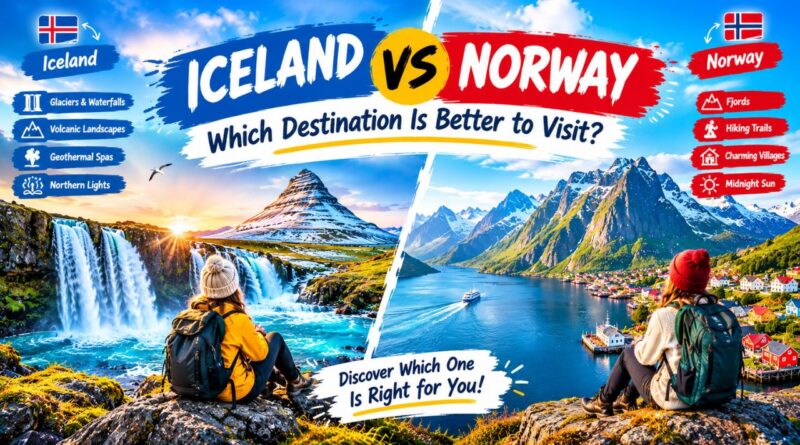
Iceland vs Norway: Which Destination Is Better to Visit?
Choosing between Iceland and Norway can feel like choosing between two incredible natural worlds. Both destinations offer dramatic landscapes breathtaking waterfalls beautiful coastlines and unforgettable outdoor adventures. However each country delivers a different kind of travel experience.
If you’re planning a European holiday you might wonder whether Iceland’s volcanic landscapes are more impressive than Norway’s famous fjords. Perhaps you want to see the Northern Lights explore scenic roads enjoy local culture or find a destination that fits your budget.
This guide to Iceland vs Norway compares everything you need to know from natural attractions and travel costs to the best time to visit. By the end you’ll have a clearer idea of which destination matches your travel style budget and expectations.
1. Iceland vs Norway: An Overview of Both Destinations
Although Iceland and Norway share a Nordic identity their landscapes and travel experiences are surprisingly different.
Iceland is famous for its volcanic terrain black-sand beaches glaciers geothermal hot springs and powerful waterfalls. Norway on the other hand is known for its deep fjords towering mountains charming coastal villages and scenic railway journeys.
| Travel Factor | Iceland | Norway |
| Famous landscapes | Volcanoes glaciers waterfalls | Fjords mountains islands |
| Northern Lights | Excellent in the dark season | Excellent in northern regions |
| Signature experience | Golden Circle and geothermal lagoons | Fjord cruises and scenic railways |
| Popular transport | Rental car and guided tours | Trains ferries buses and cars |
| Best for | Dramatic natural wonders | Fjords culture and varied scenery |
| Typical travel style | Nature-focused road trips | Scenic journeys between regions |
Neither country is automatically better. Your ideal destination depends on whether you prefer rugged volcanic scenery picturesque fjords outdoor adventures or a combination of nature and cultural experiences.
What Makes Iceland Special?
Iceland feels like a destination from another planet. You can walk across lava fields admire enormous glaciers visit geothermal areas and watch waterfalls tumble into rocky canyons—all within one trip.
The country’s famous Golden Circle route is especially popular with first-time visitors. It connects major attractions including Þingvellir National Park the Geysir geothermal area and Gullfoss waterfall.
Iceland is also an excellent choice if you want to experience natural hot springs photograph black-sand beaches or search for the Northern Lights during the darker months.
What Makes Norway Unique?
Norway offers a different kind of magic. Its landscapes combine steep mountain peaks deep blue fjords green valleys and colorful waterfront towns.
Places such as Bergen the Lofoten Islands and the Geirangerfjord showcase the country’s extraordinary scenery. You can also travel through the mountains by train take a fjord cruise or explore traditional fishing villages.
Norway is particularly appealing if you want a holiday that combines nature with museums local cuisine historic neighborhoods and comfortable transport between destinations.
2. Iceland vs Norway: Which Has Better Natural Scenery?
This is one of the biggest questions travelers ask when comparing Iceland vs Norway. Both countries are beautiful but the landscapes create different impressions.
Iceland’s Volcanoes Waterfalls and Glaciers
Iceland’s biggest advantage is the variety of dramatic geological features packed into a relatively small country.
You can visit Skógafoss and Seljalandsfoss waterfalls explore the glacier landscapes around Vatnajökull National Park and admire the unusual rock formations along the southern coast.
Reynisfjara is another famous attraction known for its black sand and basalt columns. However its waves and currents can be dangerous so visitors should follow local safety warnings and stay well back from the water.
Iceland’s scenery is especially appealing to photographers and travelers who enjoy exploring unusual landscapes. The contrast between dark volcanic rock white ice green moss and blue geothermal water creates striking views.
Norway’s Fjords Mountains and Coastal Landscapes
Norway’s scenery is more defined by its dramatic coastline and towering mountains.
The Geirangerfjord and Nærøyfjord are famous for their steep cliffs and spectacular water views. In western Norway winding roads reveal mountain viewpoints waterfalls and peaceful villages.
Further north the Lofoten Islands offer sharp mountain peaks sheltered beaches and traditional red fishing cabins. Summer brings long daylight hours while winter creates opportunities to see the Northern Lights.
Our verdict: Choose Iceland if you love volcanic scenery and geological wonders. Choose Norway if fjords mountain panoramas and scenic coastal journeys are at the top of your list.
3. Iceland vs Norway: Which Is Better for the Northern Lights?
Both countries offer excellent opportunities to see the aurora borealis but neither guarantees a sighting.
In Iceland travelers often look for the Northern Lights away from city lights around Reykjavík along the southern coast or in other areas with clear skies. The season generally runs from late August or September through April depending on darkness and conditions.
In Norway Tromsø and the wider northern region are popular places to experience the aurora. Northern Norway is particularly attractive because visitors can combine aurora hunting with Arctic landscapes and winter activities.
Your chances depend on several factors including cloud cover solar activity darkness and light pollution. Staying several nights rather than planning a single viewing evening gives you more opportunities.
Which should you choose? Iceland works well if you want to combine aurora hunting with glaciers waterfalls and geothermal attractions. Norway is an excellent option if you want an Arctic-focused holiday based around northern landscapes and winter experiences.
4. Best Time to Visit Iceland vs Norway
The best time to visit depends on what you want to experience.
Summer (June to August): Both destinations offer long daylight hours and generally better access to outdoor attractions. Iceland is popular for road trips and highland excursions when routes are open. Norway is ideal for fjord cruises hiking and exploring coastal towns.
Autumn (September to October): Autumn can bring colorful landscapes fewer visitors in some areas and the return of darker skies for Northern Lights viewing. Weather can become less predictable.
Winter (November to March): Iceland offers winter scenery ice caves when conditions and guided access permit and aurora opportunities. Norway offers skiing Arctic adventures and Northern Lights trips in the north.
Spring (April to May): Spring brings changing landscapes and gradually longer days. Some winter activities may still be possible while access to highland or mountain routes can remain limited.
If you want mild conditions for sightseeing and road travel summer is often the easiest choice. If the Northern Lights are your priority plan for the darker months and allow flexibility in your itinerary.
5. Iceland vs Norway: Which Destination Is Cheaper?
Travel costs can influence your decision particularly if you’re planning a family holiday or a longer European trip.
Neither Iceland nor Norway is generally considered a budget destination. Accommodation restaurant meals transport and organized activities can add up quickly.
However the final cost depends on your travel dates accommodation choices group size and the experiences you select.
Accommodation and Food Costs
Both countries offer everything from hostels and guesthouses to luxury hotels. Booking well in advance can help you find better options especially during popular summer periods.
In Iceland accommodation outside major towns can be limited in some areas making early reservations important. In Norway hotel prices vary considerably between cities remote destinations and peak travel periods.
Eating at restaurants every day can be expensive in both countries. Travelers who want to manage their budgets can consider self-catering accommodation supermarket meals and occasional restaurant visits.
Transportation and Activity Costs
Iceland often suits travelers who want to rent a car and explore attractions along a planned route. However fuel insurance parking and seasonal road conditions should be included in your budget.
Norway offers an extensive combination of trains buses ferries and domestic flights. These options can make a car-free itinerary possible although scenic rail journeys and organized excursions can be costly.
To compare the two destinations fairly estimate the complete cost of your trip rather than comparing flights or hotels alone.
Include transportation accommodation meals attraction tickets travel insurance and a contingency fund.
6. Things to Do in Iceland vs Norway
Both destinations offer plenty of outdoor activities but their signature experiences differ.
Top Activities to Enjoy in Iceland
- Explore the Golden Circle and its major natural attractions.
- Visit waterfalls and black-sand beaches along the southern coast.
- Relax in geothermal lagoons and naturally heated pools.
- Take a guided glacier walk or visit an accessible ice cave in the appropriate season.
- Join a Northern Lights tour during the darker months.
- Discover Reykjavík’s cafés museums restaurants and local culture.
Iceland is ideal for travelers who want to experience several different natural environments during one holiday.
Best Experiences in Norway
- Take a fjord cruise through spectacular mountain scenery.
- Explore Bergen’s historic waterfront and surrounding viewpoints.
- Travel on the famous Flåm Railway.
- Hike in scenic mountain regions when trails are suitable.
- Discover the Lofoten Islands and their fishing villages.
- Visit Tromsø for Arctic activities and Northern Lights excursions.
Norway is particularly rewarding for travelers who enjoy combining outdoor adventures with scenic transport and cultural stops.
7. Iceland vs Norway for Road Trips
Road trips are an excellent way to experience both destinations but each requires a different approach.
In Iceland the Ring Road circles much of the country and connects many of its best-known attractions. A week can provide a taste of the route but a longer trip allows more time for sightseeing and detours.
The Golden Circle is a shorter alternative for travelers with limited time. You can also explore the southern coast without attempting a complete circuit of the island.
Norway offers beautiful driving routes through fjords mountain passes coastal villages and islands. However distances can be deceptive because winding roads ferries and mountain terrain may make journeys longer than expected.
In both countries check weather forecasts and road conditions before departing. Winter driving can be challenging and some routes close seasonally.
If you prefer a compact nature-focused itinerary Iceland may be easier to organize around a few key regions. If you enjoy a longer journey with ferries villages and changing landscapes Norway is a compelling choice.
8. Iceland vs Norway: Which Is Better for Families?
Both destinations can work well for families provided the itinerary matches the children’s ages and interests.
Iceland offers waterfalls geothermal pools wildlife experiences and accessible nature attractions. Families can create an enjoyable trip without spending every day on strenuous hikes.
Norway offers family-friendly museums scenic rail journeys fjord cruises outdoor recreation and charming towns. Its transport options can also be useful when traveling with younger children.
The main consideration is travel pace. Long driving days unpredictable weather and remote accommodation can make either country tiring if you try to see too much.
Plan shorter travel days choose family-friendly accommodation and leave time for unexpected stops. Check age restrictions and safety requirements before booking glacier walks boat excursions or adventure activities.
9. Which Destination Is Better for Adventure Travelers?
For adventure lovers the Iceland vs Norway comparison comes down to the experiences you want most.
Iceland is an excellent choice for glacier walks guided ice-cave visits volcanic landscapes geothermal experiences and challenging weather photography. Some activities depend heavily on seasonal conditions and must be booked with qualified guides.
Norway is famous for mountain hiking skiing kayaking fjord exploration and Arctic adventures. Its extensive mountain and coastal regions offer opportunities for both beginners and experienced outdoor enthusiasts.
Neither country is inherently better for every adventure. Think about your fitness level available time preferred season and comfort with changing weather before deciding.
If you want to experience glaciers and volcanic terrain Iceland is a strong contender. If you dream of hiking above fjords or exploring mountain trails Norway may be the better match.
10. Iceland vs Norway: Food Culture and Local Experiences
Travel is about more than scenery. Food traditions and everyday life can make a destination memorable.
Icelandic cuisine features seafood lamb dairy products and traditional dishes shaped by the island’s history and environment. Reykjavík is the country’s main cultural hub with galleries museums music venues and independent restaurants.
Norwegian cuisine includes seafood salmon cod traditional breads and regional specialties. Cities such as Oslo and Bergen offer a mix of contemporary culture historic attractions and waterfront dining.
Both countries have strong connections to nature and outdoor recreation. Local weather seasonal daylight and regional traditions also influence daily life.
If culture and city experiences are important to you Norway offers a wider range of large urban destinations. Iceland meanwhile provides a distinctive combination of Reykjavík’s urban attractions and easy access to remarkable natural scenery.
11. How Many Days Do You Need in Iceland or Norway?
The right trip length depends on how much ground you want to cover.
For Iceland five to seven days can work well for Reykjavík the Golden Circle and selected southern-coast attractions. Allow around 10 to 14 days if you want a more relaxed Ring Road journey.
For Norway five to seven days can be enough to explore one region such as Oslo and Bergen or a focused fjord itinerary. A trip of 10 to 14 days provides more time to combine several regions depending on transport connections.
Trying to cover either country too quickly can leave you spending more time traveling than enjoying the scenery.
Choose a few priority attractions account for realistic travel times and leave space for weather-related changes.
12. Iceland vs Norway: Which Is Safer for Tourists?
Iceland and Norway are both established destinations for independent travelers but natural conditions deserve serious attention.
In Iceland visitors should respect warnings around powerful waves glaciers volcanic areas geothermal features and rapidly changing weather. Never enter restricted geothermal areas or approach glacier hazards without appropriate guidance.
In Norway mountain weather steep trails snow avalanches and remote terrain can create risks. Hikers should research routes carry suitable equipment and understand local conditions.
For both countries keep emergency contacts accessible follow official travel advice and avoid driving in conditions beyond your experience.
A safe itinerary is not necessarily the one with the fewest activities. It is the one that allows enough time preparation and flexibility to enjoy them responsibly.
13. Planning Your Trip With a Destination Management Company
Organizing a Nordic holiday can involve multiple bookings seasonal activities transport connections and accommodation choices. A destination management company (DMC) may help simplify the process particularly for groups corporate travel and customized itineraries.
A DMC can assist with local logistics accommodation arrangements guided excursions transport planning and coordinated travel experiences depending on its services.
Before choosing a provider check its destination expertise service inclusions customer feedback and ability to manage your specific travel requirements.
How an Iceland DMC Can Help
An Iceland DMC may help travelers organize a customized itinerary around their preferred destinations travel dates and activities.
For example a group interested in the Northern Lights might need accommodation outside major urban areas suitable transport and flexible sightseeing plans. A corporate group may need airport transfers meeting facilities guided excursions and coordinated meals.
A destination specialist can help bring these elements together while accounting for seasonal conditions and practical travel distances.
However services vary by provider. Confirm whether accommodation guides transport activity reservations and emergency assistance are included before committing to a package.
When to Consider Tkws DMC for Travel Planning
If you’re researching travel management options Tkws DMC can be included in your shortlist of providers to evaluate for itinerary planning and destination-related services.
Before booking verify its specific destination coverage available Iceland or Norway services experience with your type of trip and the support included in its packages.
This is particularly important if you’re planning a multi-destination holiday a group tour or a corporate incentive trip where timing and coordination matter.
Whether you work with Tkws DMC an Iceland DMC or another travel specialist compare the proposed itinerary and total costs carefully. The best partner is one that understands your requirements and provides clear verifiable service details.
14. Iceland vs Norway: Which Destination Should You Choose?
The final decision becomes easier when you match the destination to your travel priorities.
Choose Iceland if you want:
- Volcanoes glaciers black-sand beaches and geothermal scenery.
- A nature-focused road trip with memorable stops.
- Opportunities to see the Northern Lights alongside other natural attractions.
- Unique geological features and dramatic photography locations.
Choose Norway if you want:
- Deep fjords towering mountains and scenic coastal villages.
- Beautiful railway journeys and well-known hiking regions.
- A mix of outdoor experiences museums and city culture.
- Opportunities to explore Arctic Norway and the Lofoten Islands.
Choose based on your travel style not just photographs. Iceland may appeal more to travelers who want dramatic geological variety while Norway may suit those who prefer fjord scenery mountain journeys and a broader range of transport experiences.
If you have enough time and budget visiting both countries on separate trips can also be rewarding. Each offers a distinctive perspective on the Nordic region.
Conclusion:
The debate over Iceland vs Norway does not have one universal winner. Iceland stands out for its volcanoes glaciers geothermal attractions and extraordinary natural contrasts. Norway shines through its dramatic fjords mountain landscapes coastal villages and scenic travel routes.
Your best choice depends on your budget preferred activities travel dates and the kind of memories you want to bring home. Consider the total cost the time available and the destinations you most want to experience before making your decision.
If planning feels complicated researching a suitable destination management company may help you coordinate your itinerary more efficiently. Whether you choose an Iceland DMC evaluate Tkws DMC or plan independently focus on a realistic schedule that leaves room to enjoy the journey.
Ultimately both destinations offer unforgettable experiences. Choose the one that best matches your priorities prepare for changing weather and give yourself enough time to explore beyond the famous viewpoints.
Frequently Asked Questions
Q1. Is Iceland or Norway better for first-time visitors?
Iceland is a strong option for first-time visitors who want to experience waterfalls glaciers geothermal attractions and volcanic landscapes in one trip. Norway is ideal for travelers interested in fjords scenic rail journeys mountain scenery and coastal towns. The better choice depends on your interests and itinerary.
Q2. Is Iceland more expensive than Norway?
Both countries can be expensive and the overall cost depends on the season accommodation transportation food and activities. Iceland road trips can involve substantial fuel and vehicle costs while Norway’s trains ferries and organized excursions can increase expenses. Compare a complete itinerary before deciding which is cheaper for you.
Q3. Which country is better for seeing the Northern Lights?
Both Iceland and Norway offer excellent aurora-viewing opportunities. Iceland suits travelers who want to combine Northern Lights excursions with glaciers and waterfalls while northern Norway is especially popular for Arctic experiences around Tromsø and nearby regions. Clear skies darkness and solar activity influence your chances.
Q4. How many days are enough for Iceland and Norway?
Five to seven days can provide a rewarding introduction to Iceland’s main southern attractions or one Norwegian region. Around 10 to 14 days allows more time for extensive road trips or multi-region itineraries. Your ideal duration depends on the route transport options and how quickly you prefer to travel.
Q5. Can you visit Iceland and Norway on the same trip?
Yes you can combine Iceland and Norway in one holiday provided flight connections and your travel dates work. A trip of two weeks or longer gives you more flexibility to explore selected highlights in both countries. Rather than trying to see everything choose a few priority regions and allow sufficient time for transport and weather-related changes.