
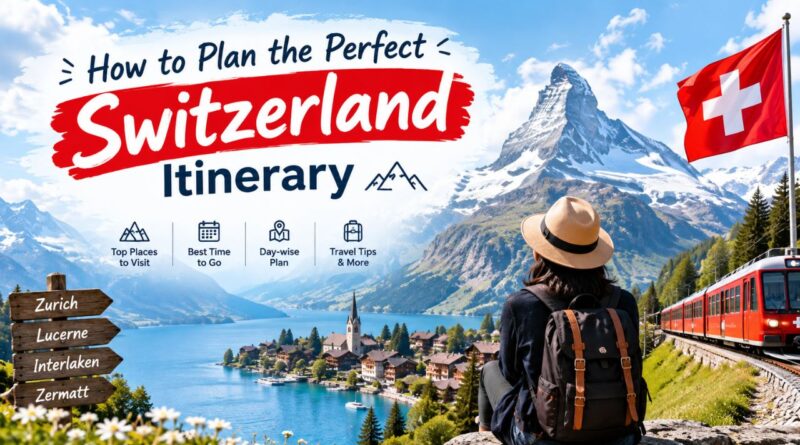
How to Plan the Perfect Switzerland Itinerary
Planning the perfect Switzerland Itinerary is an exciting way to explore a country filled with snow-capped mountains, crystal-clear lakes, charming villages, scenic train journeys, and historic cities. From the breathtaking Swiss Alps and peaceful streets of Lucerne to the spectacular landscapes of Interlaken, Switzerland offers unforgettable experiences for every type of traveler.
But with so many incredible places to visit, planning your trip can quickly become overwhelming. Should you start in Zurich? How many days should you spend in Lucerne? Is Zermatt worth adding to your route? And how can you enjoy Switzerland’s famous mountain scenery without spending too much time traveling between destinations?
The key is to build your trip around your interests, available time, and budget instead of trying to see everything in one journey. A well-planned route can help you enjoy more experiences while keeping your travel days comfortable and efficient.
In this guide, you’ll discover how to create a practical Switzerland travel itinerary, with suggested routes for five, seven, and ten days, useful budget tips, transportation advice, and ideas for making the most of your Swiss adventure.
Why Switzerland Should Be on Your Travel Bucket List
Switzerland offers an unusual combination of natural beauty, cultural experiences, outdoor activities, and efficient transportation. You can spend the morning exploring a medieval old town, enjoy lunch beside a beautiful lake, and finish your day surrounded by dramatic alpine scenery.
Nature lovers can discover glaciers, mountain trails, and waterfalls. Couples can enjoy romantic lakeside walks and scenic train rides, while families can explore interactive museums, mountain playgrounds, and accessible walking trails.
Switzerland also offers a distinctive cultural experience. German, French, Italian, and Romansh are national languages, and the language and traditions you encounter can change as you travel between regions.
Food is another reason to visit. Swiss cheese fondue, raclette, rösti, Swiss chocolate, and regional pastries provide plenty of opportunities to experience local cuisine.
Whether you are planning a relaxing holiday or an adventure-filled escape, a well-designed Switzerland itinerary helps you experience these attractions without rushing from one place to another.
What to Know Before Planning Your Switzerland Itinerary
Before booking hotels and activities, take some time to understand your travel priorities. A little preparation can save money, reduce unnecessary transfers, and make your holiday more enjoyable.
Choose the Right Time to Visit Switzerland
Switzerland is a year-round destination, but each season offers a different experience.
- Spring (March to May): Enjoy blooming landscapes, quieter cities, and the transition from winter to summer. Some high-altitude trails and mountain facilities may remain closed because of snow.
- Summer (June to August): Ideal for hiking, lake cruises, mountain excursions, and outdoor sightseeing. Popular destinations can be busy, and accommodation prices may be higher.
- Autumn (September to November): Explore colorful forests, peaceful lakesides, and vineyards. Weather conditions can change, particularly in the mountains.
- Winter (December to February): Perfect for skiing, snowboarding, Christmas markets, and snowy alpine scenery. Check seasonal transport and attraction schedules before traveling.
If your main goal is hiking, summer is often a practical choice. For snow activities, winter is more suitable. Spring and autumn can appeal to travelers who prefer a different atmosphere, provided they remain flexible about mountain excursions.
Decide How Many Days You Need
The ideal trip length depends on your interests and travel pace.
A five-day trip can cover a few major destinations, while seven days provides additional time for the Jungfrau Region or another alpine destination. Ten days allows you to explore more regions without changing hotels every night.
Consider your arrival and departure times, too. A flight arriving late in the evening does not give you a full sightseeing day.
Set a Realistic Travel Budget
Switzerland is generally an expensive destination compared with many other European countries. Accommodation, restaurant meals, mountain excursions, and intercity transportation can take up a substantial part of your budget.
Plan your expenses around these categories:
- International flights and airport transfers
- Hotels or apartments
- Trains, buses, and local transport
- Mountain railways, cable cars, and sightseeing tickets
- Meals, snacks, and drinks
- Travel insurance and miscellaneous expenses
Leave some room for unexpected costs and activities you discover along the way. Mountain excursions can be expensive, so choose the experiences that matter most to you instead of booking every available attraction.
How to Plan Your Switzerland Travel Itinerary
A successful Switzerland travel itinerary combines sightseeing with enough time to enjoy each destination. Use the following steps to organize your route.
Choose Your Main Destinations
Start by selecting three or four destinations that match your interests.
Zurich is useful for international arrivals, shopping, museums, and urban sightseeing. Lucerne combines historic streets with lake and mountain scenery. Interlaken provides access to the Jungfrau Region, while Zermatt is famous for its views of the Matterhorn.
If you enjoy lakeside towns and French-speaking Switzerland, consider Montreux or Lausanne. Geneva can also be included if you want to explore the western part of the country.
Rather than visiting every location, select destinations that complement one another.
Understand Swiss Transportation
Switzerland has an extensive public transportation network connecting cities, towns, and many mountain destinations.
Trains are especially useful for traveling between major cities. Buses and boats provide additional connections, while cable cars and mountain railways take visitors closer to alpine viewpoints.
The Swiss Travel Pass may be worth considering if you plan to make frequent journeys on participating public transport services. Compare its price and benefits with individual tickets and other available travel passes before purchasing.
Check routes, connections, ticket conditions, and seasonal services using the official Swiss public transport journey planner at
SBB – Swiss Federal Railways.
Book Accommodation in Advance
Choose accommodation based on your planned activities and transport connections.
Zurich and Lucerne work well for city sightseeing, while Interlaken can be a convenient base for exploring Lauterbrunnen, Grindelwald, and other Jungfrau Region destinations. Zermatt is suitable for travelers who want to spend time near the Matterhorn.
For a short trip, staying two nights in one location can be more comfortable than moving hotels every day.
During busy summer periods, winter sports seasons, and major holiday periods, booking ahead can provide more choice. Before confirming a hotel, check its distance from the station, breakfast options, cancellation policy, and access to local attractions.
Switzerland Itinerary for 5 Days
A 5 days itinerary for switzerland works well for travelers with limited vacation time. The key is to focus on a compact route instead of attempting to cover the entire country.
This suggested itinerary combines Zurich, Lucerne, Interlaken, and the surrounding alpine scenery. You can adjust the order depending on your arrival airport and transportation connections.
Day 1 – Explore Zurich
Begin your trip in Zurich, Switzerland’s largest city.
After arriving, settle into your accommodation and explore the Old Town, known locally as Altstadt. Wander through narrow streets, admire historic buildings, and visit the area around Lindenhof for views over the city.
Continue toward Bahnhofstrasse for shopping or enjoy a relaxing walk beside Lake Zurich. If you have extra time, visit a museum or stop at a traditional café for Swiss chocolate.
Avoid scheduling too many activities on your arrival day. Give yourself time to recover from your journey and enjoy the city at a comfortable pace.
Suggested overnight stay: Zurich.
Day 2 – Discover Lucerne
Travel to Lucerne and spend the day exploring one of Switzerland’s most picturesque cities.
Start with Chapel Bridge, a historic covered wooden bridge that has become one of the city’s best-known landmarks. Walk through the Old Town, admire its painted facades, and explore the waterfront.
After lunch, enjoy views of Lake Lucerne. If boat services and your schedule allow, consider a lake cruise to appreciate the surrounding mountains from the water.
Lucerne is also a convenient base for mountain excursions, although you should choose just one major excursion if you have limited time.
Suggested overnight stay: Lucerne.
Day 3 – Experience Interlaken
Travel to Interlaken, a town situated between Lake Thun and Lake Brienz.
Once you arrive, explore the town center and enjoy views of the surrounding mountains. Visit Höhematte Park, take photographs of the alpine landscape, or relax at a café.
If you have time, consider a boat trip on one of the nearby lakes. Travelers interested in adventure activities can also explore options such as paragliding, subject to weather conditions and availability.
Interlaken is a useful base for exploring the Bernese Oberland, so staying here gives you flexibility for the following day.
Suggested overnight stay: Interlaken.
Day 4 – Visit Lauterbrunnen and the Swiss Alps
Dedicate this day to the landscapes of Lauterbrunnen Valley.
Lauterbrunnen is famous for its dramatic cliffs, waterfalls, green meadows, and traditional Swiss chalets. Walk through the village and visit the accessible viewing areas around Staubbach Falls.
If conditions permit, continue toward Wengen or Mürren for panoramic mountain views and charming village scenery.
Choose your excursions according to the weather and available transport. You do not need to visit every village in one day; taking time to appreciate the landscape is part of the experience.
Suggested overnight stay: Interlaken.
Day 5 – Enjoy a Scenic Mountain Excursion
Spend your final day enjoying one memorable mountain experience before returning to Zurich or continuing to your next destination.
Depending on the season, you could explore Grindelwald, take a mountain railway, or visit a suitable alpine viewpoint. Travelers considering Jungfraujoch should check ticket prices, weather, altitude considerations, and travel time in advance.
If your departure is from Zurich, allow enough time to reach the airport. Avoid booking a lengthy mountain excursion immediately before an international flight.
Best for: Travelers who want a short introduction to Swiss cities, lakes, and mountain scenery.
Switzerland Itinerary 7 Days
A switzerland itinerary 7 days gives you more flexibility than a five-day trip. You can explore the major highlights while including additional time for alpine villages and mountain activities.
Days 1–2 – Zurich and Lucerne
Arrive in Zurich and spend your first day exploring the Old Town, Lake Zurich, and the city’s cultural attractions.
On day two, travel to Lucerne. Explore Chapel Bridge, the waterfront, and the historic center. If you prefer mountain scenery, consider a Mount Pilatus or Mount Rigi excursion, checking seasonal operating arrangements before you go.
You may choose to stay overnight in Lucerne or continue your journey according to your transport schedule.
Days 3–4 – Interlaken and Lauterbrunnen
Travel to Interlaken and use it as your base for exploring the Jungfrau Region.
On day three, discover Interlaken, enjoy the lakes, and take in the mountain views.
On day four, visit Lauterbrunnen and choose between Wengen, Mürren, or Grindelwald. Each offers a different perspective on the surrounding alpine landscape.
If you prefer hiking, select a trail suited to your fitness level and the season. Always check local trail conditions before setting out.
Days 5–6 – Explore Zermatt and the Matterhorn
Travel to Zermatt, a mountain resort village known for the iconic Matterhorn.
Spend your first day exploring the village, browsing local shops, and enjoying views of traditional chalets and mountain scenery.
On day six, consider the Gornergrat railway or another suitable viewpoint, depending on weather and budget. The area offers spectacular mountain panoramas, but visibility can vary significantly from day to day.
Remember that Zermatt is car-free in its central area. Plan your arrival and local transfers accordingly.
Day 7 – Return to Zurich or Geneva
Use your final day to travel toward your departure airport.
If you have a later flight, you may have time for a relaxed breakfast, a short walk, or a brief stop in a town along your route. However, avoid adding a distant destination if it risks making your airport transfer stressful.
Best for: First-time visitors who want a balanced introduction to Switzerland, including cities, lakes, and the Alps.
Switzerland Itinerary 10 Days
A switzerland itinerary 10 days gives you more opportunities to explore different regions, enjoy slower mornings, and adapt your plans to changing mountain weather.
The following route combines central Switzerland, the Bernese Oberland, Zermatt, and the Lake Geneva region.
Days 1–2 – Zurich and Rhine Falls
Begin in Zurich with a relaxed exploration of the Old Town, Bahnhofstrasse, and Lake Zurich.
On day two, consider a half-day trip to Rhine Falls near Schaffhausen. The waterfall is known for its impressive volume of water and scenic viewing areas. Check seasonal boat operations if you want to experience the falls from the water.
Return to Zurich or continue to Lucerne, depending on your preferred pace.
Days 3–4 – Lucerne and Mount Pilatus
Spend day three discovering Lucerne’s historic center, Chapel Bridge, and lakeside promenade.
On day four, plan a mountain excursion to Mount Pilatus or Mount Rigi. Both offer opportunities to appreciate the landscape around Lake Lucerne, although the available routes and transport arrangements differ.
Choose one mountain experience rather than squeezing in several. This leaves room for a lake cruise, a leisurely lunch, or an unplanned stop along the way.
Days 5–6 – Interlaken and Jungfrau Region
Travel to Interlaken and spend two days exploring the surrounding region.
Visit Lauterbrunnen, enjoy the village atmosphere of Wengen, or explore Grindelwald. You can also choose a mountain excursion based on your budget, interests, and the weather.
Two days in this region allow you to separate village sightseeing from a longer mountain trip.
For outdoor activities, carry suitable footwear and layers, even during summer. Mountain conditions can differ considerably from those in the valley.
Days 7–8 – Zermatt and the Matterhorn
Continue to Zermatt for two nights.
Explore the village on day seven and enjoy the mountain scenery at a relaxed pace. On day eight, consider visiting Gornergrat or another viewpoint offering views of the Matterhorn.
Photography enthusiasts should leave room in their schedule for changing light and weather. A clear morning may provide better visibility than an afternoon cloud cover, but mountain conditions are never guaranteed.
If you prefer walking, choose an open trail appropriate for the season and your experience.
Days 9–10 – Montreux, Lausanne, or Geneva
Head toward Lake Geneva for a different side of Switzerland.
In Montreux, stroll along the lakeside promenade and consider visiting Chillon Castle. The castle sits beside the lake and provides a glimpse into the region’s history.
Alternatively, explore Lausanne, with its historic center, cathedral, and lakeside surroundings. Geneva is another option if you are interested in museums, international institutions, and city sightseeing.
On day ten, use your remaining time according to your flight schedule. If departing from Geneva, staying nearby on the final night may simplify your journey.
Best for: Travelers who want a more comprehensive Switzerland travel itinerary with time for several regions.
Best Places to Include in a Switzerland Itinerary
Choosing the right destinations is more important than collecting the largest number of stops.
Here are some places to consider when building your route.
- Zurich: A practical starting point for international arrivals, with shopping, museums, dining, and a historic center.
- Lucerne: Ideal for combining old-town sightseeing with lake views and nearby mountain excursions.
- Interlaken: A convenient base for exploring the Bernese Oberland and its alpine villages.
- Lauterbrunnen: Known for waterfalls, dramatic cliffs, and access to mountain communities.
- Grindelwald: Suitable for travelers interested in mountain scenery, cable cars, hiking, and seasonal outdoor activities.
- Zermatt: A destination for Matterhorn views, alpine walks, and mountain railways.
- Montreux: Offers a lakeside atmosphere, vineyard landscapes nearby, and access to Chillon Castle.
- Geneva: A useful departure point for some itineraries, with museums, lakeside attractions, and international organizations.
You do not need to include every destination. Select the places that fit your available time and the kind of holiday you want.
How Much Does a Switzerland Trip Cost?
Your total trip cost depends on the season, accommodation category, travel style, and excursions you choose.
Switzerland’s prices can be higher than those in many neighboring countries, particularly for hotels and mountain activities. However, planning ahead can help you manage your expenses.
Consider the following strategies:
- Compare accommodation options: Look at hotels, guesthouses, and apartments in locations with convenient transport.
- Plan your transport costs: Compare individual train tickets with available travel passes before committing.
- Mix restaurant meals with simpler options: Supermarkets, bakeries, and takeaway meals can help control food expenses.
- Choose mountain excursions carefully: Prioritize one or two experiences that matter most to you.
- Travel during shoulder seasons: Compare dates in spring or autumn if your schedule is flexible, while checking attraction opening periods.
Create a daily budget and track major bookings before departure. For an accurate estimate, check current ticket prices, hotel rates, and activity fees for your specific travel dates.
What to Pack for Switzerland
Packing for Switzerland requires some flexibility because weather can change between cities, lakes, and mountain areas.
For most trips, consider bringing:
- Comfortable walking shoes with good grip
- Lightweight layers and a warm jacket
- A waterproof jacket or compact umbrella
- Sunglasses, sunscreen, and a hat
- A reusable water bottle
- A small daypack for excursions
- Any necessary medication and travel documents
- Appropriate clothing for the season and planned activities
If you intend to hike, bring suitable footwear and check trail conditions before departure. For high-altitude excursions, warm layers and sun protection are particularly important, even during summer.
Traveling in winter requires additional preparation, including insulated clothing, gloves, and suitable footwear for snow and icy surfaces.
Common Switzerland Itinerary Mistakes to Avoid
Even a carefully planned holiday can become stressful if your schedule is too ambitious.
Trying to Visit Too Many Places
Switzerland may look small on a map, but mountain journeys and transfers can take longer than expected. Focus on a few regions rather than trying to visit every famous destination.
Ignoring Travel Time
Include time for hotel check-ins, station transfers, luggage, and connections. A day with several long train journeys may leave little time for sightseeing.
Forgetting Seasonal Closures
Some mountain railways, cable cars, hiking trails, and attractions operate seasonally or close for maintenance. Verify availability before building your schedule around a particular experience.
Underestimating Mountain Weather
A cloudy day can affect visibility at famous viewpoints. Keep your plans flexible and consider switching excursion days when practical.
Booking Every Activity in Advance
Some reservations are necessary, but leaving a little free time helps you adapt to weather, transport changes, and personal preferences.
How Travel Professionals and Tkws DMC Can Help
Planning a Switzerland itinerary involves more than choosing attractions. Travelers also need to coordinate hotels, transportation, sightseeing, regional connections, and special requests.
For travel agents and tour operators, these details become especially important when arranging trips for families, couples, groups, or clients with different budgets.
A destination management company (DMC) can help travel professionals coordinate destination services, develop suitable travel programs, and communicate with local suppliers, depending on the company’s service offering.
When considering Tkws DMC for travel planning support, confirm its Switzerland coverage, available services, supplier arrangements, pricing, and booking terms directly with the company. This ensures that the proposed itinerary matches your clients’ requirements.
Travel professionals can also improve the planning process by organizing trips around a few practical principles:
- Match destinations to the client’s interests and travel duration.
- Group nearby attractions to reduce unnecessary transfers.
- Allow enough time for check-ins and transportation.
- Provide alternative activities for poor weather.
- Explain optional excursions and their additional costs.
- Confirm seasonal operations and supplier availability before finalizing bookings.
Whether you are planning a personal holiday or creating a travel proposal for clients, a clear itinerary makes the journey easier to understand and manage.
Conclusion
Planning the perfect Switzerland itinerary becomes much easier when you focus on your travel priorities, available time, and preferred pace. Five days can introduce you to Zurich, Lucerne, Interlaken, and the surrounding mountains. Seven days allows more time for the Jungfrau Region and Zermatt, while ten days opens up opportunities to explore Lake Geneva and additional destinations.
Start by choosing the places you most want to experience, then organize them into a practical route using Switzerland’s public transportation network. Book essential accommodation and popular excursions in advance, check seasonal conditions, and leave room for unexpected discoveries.
Most importantly, do not treat your itinerary as a checklist. Switzerland’s charm lies in its little moments: a peaceful lakeside walk, a scenic train ride, a village café, or a breathtaking view of the Alps. With thoughtful planning, you can enjoy a memorable Swiss holiday at a pace that suits you.
FAQs
Q1. What is the best Switzerland itinerary for first-time visitors?
For first-time visitors, a route covering Zurich, Lucerne, Interlaken, Lauterbrunnen, and optionally Zermatt provides a varied introduction to Switzerland. Choose a five-, seven-, or ten-day plan depending on your schedule and preferred pace.
Q2. Is five days enough to visit Switzerland?
Yes, five days can be enough for a short introduction to Switzerland. Focus on two or three main bases, such as Zurich, Lucerne, and Interlaken, rather than attempting to cover the entire country.
Q3. Is seven or ten days better for Switzerland?
Seven days offers time to explore several major destinations, while ten days provides greater flexibility for additional regions, mountain excursions, and relaxed sightseeing. The right duration depends on your interests, budget, and travel pace.
4. What is the cheapest way to travel around Switzerland?
Compare individual train tickets with available travel passes, book accommodation early, and consider supermarkets or bakeries for some meals. The most economical transport option depends on your route, travel dates, and planned excursions.
Q5. When should I book my Switzerland trip?
Book flights and accommodation once your dates and main route are established, especially if traveling during busy summer or winter periods. Reserve popular excursions when necessary, and check current operating schedules before finalizing your itinerary.