
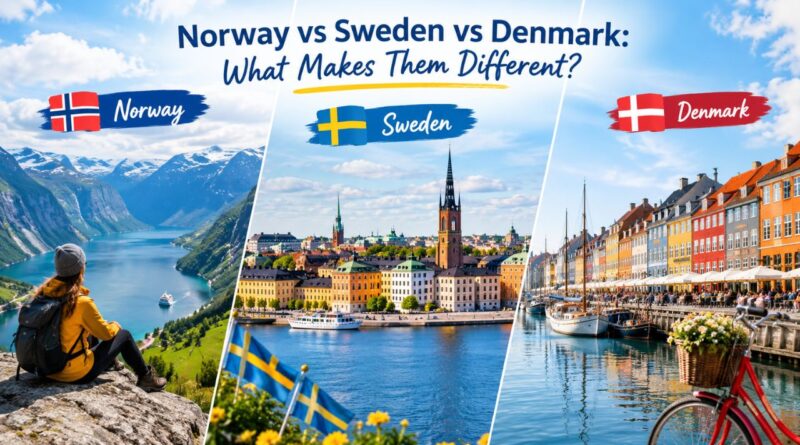
Norway vs Sweden vs Denmark: What Makes Them Different?
Planning a Scandinavian holiday can be surprisingly difficult. Norway Sweden and Denmark may share similar traditions languages and historical connections but each country offers a distinctly different travel experience.
So when comparing Norway vs Sweden vs Denmark where should you go?
Norway is known for dramatic fjords mountains scenic roads and outdoor adventures. Sweden combines stylish cities with vast forests peaceful lakes and a strong connection to nature. Denmark offers charming cities coastal landscapes historic architecture and a relaxed lifestyle.
This guide breaks down their countries culture and geography food attractions travel styles and practical differences to help you understand what makes each destination special.
Understanding Scandinavia
Scandinavia traditionally refers to Norway Sweden and Denmark. These three countries share historical cultural and linguistic connections although they have developed their own identities over centuries.
For travelers the similarities can sometimes make the countries seem interchangeable. They are not.
Think of them as three neighboring chapters in the same travel story. The overall atmosphere may feel familiar but the scenery activities food cities and experiences can change dramatically from one country to another.
Which Countries Are Considered Scandinavian?
The traditional definition of Scandinavia includes:
- Norway
- Sweden
- Denmark
Finland and Iceland are often included in broader discussions about the Nordic region. However they are not traditionally classified as Scandinavian countries.
This distinction matters when researching a Scandinavian itinerary because Norway Sweden and Denmark form the traditional core of Scandinavia.
Countries Culture and Geography
Geography plays a major role in shaping the character of these countries.
Norway stretches along a long rugged coastline and is famous for mountains and fjords. Sweden is larger geographically and has extensive forests lakes and a long Baltic coastline. Denmark is much flatter with numerous islands and a landscape that is relatively easy to explore.
Their cultures also reflect these surroundings. Outdoor life is important across the region while cities combine modern design with historic neighborhoods and traditional customs.
Norway vs Sweden vs Denmark at a Glance
Before going deeper here is a simple comparison:
| Feature | Norway | Sweden | Denmark |
| Famous for | Fjords and mountains | Forests lakes and design | Cycling castles and hygge |
| Capital | Oslo | Stockholm | Copenhagen |
| Landscape | Rugged and mountainous | Forested and varied | Flat and coastal |
| Popular activities | Hiking cruises scenic drives | City trips nature museums | Cycling food history |
| Travel style | Adventure-focused | Balanced city and nature | Relaxed cultural travel |
| Major highlight | Norwegian fjords | Stockholm archipelago | Copenhagen |
Each country can work for different types of travelers. This is why understanding the differences is useful before booking your trip.
Geography and Natural Landscapes
One of the biggest differences between these destinations is their physical geography.
Norway’s Mountains and Fjords
Norway is the destination to consider if dramatic scenery is high on your travel list.
Its landscape is dominated by mountains deep fjords waterfalls glaciers and rugged coastlines. Famous areas such as the Geirangerfjord and Nærøyfjord showcase the scale and beauty of the Norwegian landscape.
Road trips are particularly memorable because the journey itself becomes part of the attraction. One moment you may be driving beside a calm fjord and minutes later you can be surrounded by towering mountains.
Norway is also popular for hiking kayaking fjord cruises Northern Lights experiences and other outdoor activities.
Sweden’s Forests and Lakes
Sweden provides a different kind of natural beauty.
Instead of focusing primarily on dramatic mountains and fjords Sweden is characterized by forests lakes islands and expansive open spaces. The country offers plenty of opportunities for hiking wildlife experiences kayaking camping and peaceful countryside escapes.
The Stockholm archipelago is another highlight. Thousands of islands create a fascinating coastal landscape that can be explored from the Swedish capital.
Denmark’s Coastlines and Islands
Denmark is generally flatter than Norway and Sweden. This makes it particularly comfortable for cycling and relaxed exploration.
Its landscape includes beaches farmland forests coastal towns and numerous islands. Instead of chasing enormous mountains visitors can enjoy seaside villages historic castles colorful streets and bike-friendly cities.
Denmark’s compact size also makes it convenient for travelers who want to combine several destinations without spending too much time on long journeys.
Culture and History
Culture is another important difference when comparing Norway Sweden and Denmark.
All three countries have strong historical connections but their traditions and modern lifestyles have developed differently.
Norwegian Culture and Heritage
Norwegian culture has a strong connection to nature and maritime history. Fishing seafaring exploration and life in remote landscapes have influenced the country’s identity.
Norway also has a fascinating Viking heritage. Museums and historical sites provide opportunities to learn about the seafaring communities that once traveled across northern Europe.
Modern Norway combines this heritage with contemporary architecture outdoor living and a strong appreciation for natural surroundings.
Swedish Culture and Traditions
Swedish culture is often associated with design innovation simplicity and a balanced approach to everyday life.
Traditions such as Midsummer are an important part of Swedish culture while the concept of fika has become famous internationally. Fika is essentially a social coffee break often enjoyed with something sweet and good conversation.
Sweden also has a rich royal artistic and industrial history. This is particularly visible in Stockholm and other historic cities.
Danish Culture and History
Denmark has its own distinctive cultural identity influenced by centuries of monarchy maritime trade agriculture and design.
Danish cities combine historic buildings with modern architecture and creative neighborhoods. The Danish concept of hygge is often associated with comfort and togetherness and is another cultural idea that attracts visitors.
For travelers interested in culture and history Denmark offers castles museums old towns royal landmarks and Viking heritage sites.
Major Cities to Explore
The capitals provide a useful introduction to the personality of each country.
Oslo
Oslo combines urban attractions with easy access to nature. Visitors can explore museums waterfront areas parks restaurants and cultural attractions before heading into nearby outdoor areas.
It is a practical starting point for travelers who want to combine city sightseeing with Norwegian nature.
Stockholm
Stockholm is built across islands and is often admired for its waterfront setting.
Gamla Stan the city’s historic old town features narrow streets colorful buildings cafés and historic architecture. Museums and modern shopping areas add another layer to the experience.
Stockholm works particularly well for travelers who want both urban culture and access to nature.
Copenhagen
Copenhagen is compact stylish and easy to explore.
Cycling is deeply integrated into everyday life. Attractions such as Nyhavn Tivoli Gardens palaces museums and historic neighborhoods make the city appealing to first-time visitors.
Its food scene is another major attraction. You can find traditional Danish dishes alongside modern Nordic cuisine.
Food and Traditional Dishes
Food is one of the easiest ways to experience the differences between these countries.
What Is Norway Famous For? Traditional Dishes
Norwegian cuisine has a strong connection to the sea and natural resources.
Visitors may encounter dishes featuring salmon cod herring potatoes and locally sourced ingredients. Traditional options such as fårikål which is a lamb and cabbage dish provide a taste of classic Norwegian cooking.
Seafood lovers will find plenty to enjoy especially in coastal destinations.
Swedish Food to Try
Sweden is famous for dishes such as Swedish meatballs often served with potatoes and lingonberry sauce.
Other foods worth trying include gravlax pickled herring crispbread cinnamon buns and various pastries associated with fika.
Swedish food tends to balance simple ingredients with comforting flavors.
Danish Food to Try
Denmark has a strong culinary tradition centered around bread seafood meat and seasonal ingredients.
One of the most recognizable foods is smørrebrød. This is an open-faced sandwich usually built on rye bread with different toppings.
Danish pastries seafood dishes hot dogs and modern Nordic cuisine are also popular choices.
Best Places and Things to Do
Your choice becomes easier when you consider what you actually want to do.
Best Experiences in Norway
Norway is ideal for travelers interested in dramatic outdoor scenery.
Some popular experiences include:
- Exploring Norwegian fjords
- Hiking in mountain regions
- Taking scenic railway journeys
- Enjoying fjord cruises
- Searching for the Northern Lights
- Exploring coastal towns
- Taking a scenic road trip
If your dream holiday involves mountains waterfalls and huge natural landscapes Norway provides plenty of possibilities.
Best Experiences in Sweden
Sweden offers a mixture of urban exploration and outdoor experiences.
You can explore Stockholm’s historic center visit museums travel through the countryside enjoy the archipelago hike in forests or spend time beside one of the country’s many lakes.
Sweden can be particularly appealing if you want your itinerary to alternate between city experiences and peaceful nature.
Best Experiences in Denmark
Denmark is excellent for travelers who enjoy history food architecture and relaxed exploration.
Popular activities include:
- Exploring Copenhagen
- Cycling through Danish cities
- Visiting castles
- Discovering coastal towns
- Trying traditional Danish food
- Exploring museums
- Visiting Viking heritage sites
The country is also a good option for shorter Scandinavian trips because several attractions can be reached relatively easily.
Weather and Best Time to Visit
Scandinavian weather changes considerably by season and location.
Summer generally provides longer daylight hours and comfortable conditions for sightseeing and outdoor activities. This makes it popular for road trips hiking city exploration and coastal travel.
Winter brings shorter days and colder conditions. However it also creates opportunities for snow experiences and Northern Lights trips particularly in northern Norway and Sweden.
Denmark’s milder and more compact environment can feel different from the colder northern regions of Norway and Sweden.
The best time depends on your priorities. Want long days and outdoor exploration? Summer may suit you. Interested in winter scenery and Northern Lights experiences? A winter trip could be more appropriate.
Travel Costs and Getting Around
Travel expenses vary by destination accommodation season and travel style.
Norway Sweden and Denmark can all be relatively expensive compared with many European destinations. Accommodation restaurants transportation and activities can quickly add up particularly in major cities and during peak seasons.
Norway is especially known among travelers for higher costs while Sweden and Denmark also require careful budgeting.
Public transportation is well developed in major cities. Trains buses ferries and domestic flights can help connect different destinations.
When planning your route avoid trying to see everything. Scandinavia may look compact on a map but distances can be significant. A slower itinerary often produces a better travel experience.
Essential Travel Checklist for Scandinavia
A practical Essential Travel Checklist can make your trip much smoother.
Consider packing:
- Comfortable walking shoes
- Weather-resistant clothing
- Warm layers
- A waterproof jacket
- Travel documents
- Universal travel adapters
- Reusable water bottle
- Portable power bank
- Day backpack
- Any required medications
- Offline maps and travel information
Layering is particularly useful because Scandinavian weather can change quickly.
If you are visiting in winter add suitable thermal clothing gloves a warm hat and appropriate footwear.
Norway vs Sweden vs Denmark: Which Fits Your Trip?
There is no single destination that suits every traveler.
Choose Norway if your priority is dramatic scenery fjords mountains hiking and outdoor adventures.
Consider Sweden if you want a combination of stylish cities forests lakes islands museums and cultural experiences.
Consider Denmark if you prefer compact city breaks cycling castles food coastal landscapes and historic attractions.
You can also combine all three. A multi-country Scandinavian itinerary allows you to experience how closely connected these destinations are while discovering their individual personalities.
Conclusion
The comparison of Norway vs Sweden vs Denmark is less about finding one destination that is universally better and more about understanding what each country offers. Norway stands out for its spectacular fjords and mountains. Sweden blends urban culture with forests lakes and islands. Denmark offers historic cities coastal scenery cycling food and a relaxed atmosphere.
Understanding their geography culture history food attractions and travel styles can help you create an itinerary that matches your interests. Whether you want an adventurous road trip a cultural city break or a balanced Scandinavian journey these three countries provide plenty of options.
FAQs
Q1. Is Norway or Sweden better for nature?
Both offer impressive natural landscapes but the scenery is different. Norway is particularly known for dramatic fjords and mountains while Sweden is known for forests lakes islands and expansive wilderness.
Q2. Is Denmark part of Scandinavia?
Yes. In the traditional geographical and cultural definition Scandinavia consists of Denmark Norway and Sweden.
Q3. Which Scandinavian country is best for a first trip?
It depends on what you want to experience. Norway suits travelers focused on dramatic nature. Sweden offers a mix of cities and outdoor experiences. Denmark is convenient for cultural and city-focused travel.
Q4. Which country has the best traditional Scandinavian food?
Norway Sweden and Denmark each have distinctive food traditions. Norway is strongly associated with seafood. Sweden is known for meatballs and fika culture. Denmark is known for smørrebrød and pastries.
Q5. Can I visit Norway Sweden and Denmark on one trip?
Yes. The three countries can be combined into a multi-country itinerary. Your ideal route will depend on the length of your trip transportation preferences budget and the destinations you want to visit.