
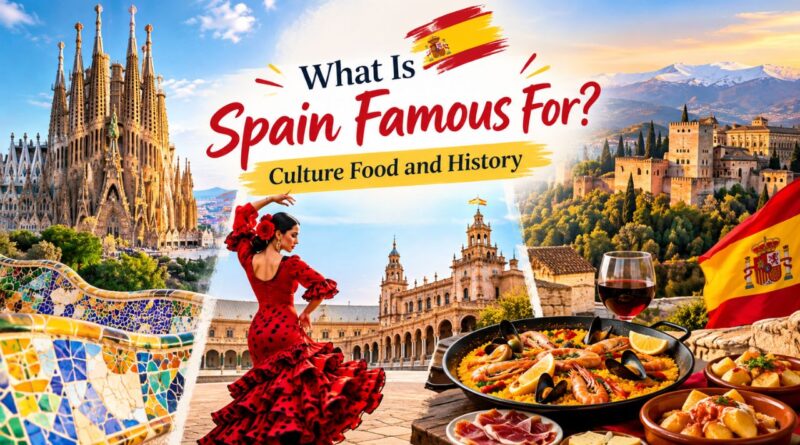
What Is Spain Famous For? Culture Food and History
Why Is Spain So Famous?
What comes to mind when you hear the word Spain? Perhaps flamenco dancers sunny beaches mouthwatering paella historic buildings football or lively streets filled with laughter and music. The truth is Spain is famous for all of these things and much more.
Located in southwestern Europe Spain blends centuries of history with a modern energetic lifestyle. Every region has its own personality flavors traditions and landscapes. That variety makes the country feel less like a single destination and more like a collection of unforgettable experiences.
Whether you’re interested in history food art beaches architecture or Spain Travel there is something here to capture your attention.
Spain’s Rich and Diverse Culture
One of Spain’s greatest attractions is its culture. Spanish culture isn’t one-size-fits-all. From Catalonia and Andalusia to Galicia and the Basque Country regional identities add remarkable depth to the country.
Spanish life often revolves around food family festivals conversation and community. People know how to slow down and enjoy the moment. For travelers that relaxed approach can be just as memorable as visiting a famous landmark.
Spanish Traditions and Everyday Life
Spanish traditions have developed over thousands of years. Roman Christian Jewish and Islamic influences have all contributed to the country’s cultural identity.
Regional Cultures Across Spain
Travel from one region to another and you’ll quickly notice differences in architecture cuisine language music and celebrations. This diversity is one reason returning to Spain can feel like discovering a completely different country.
Flamenco Music and Dance
Flamenco is perhaps Spain’s most recognizable cultural art form. Originating primarily in Andalusia it combines passionate singing rhythmic guitar playing expressive dancing and powerful percussion.
A live flamenco performance isn’t simply something you watch. It’s an emotional experience almost like seeing a story told without needing a single page of a book.
Spain’s Fascinating History
Spain’s history is layered like an old city wall with each period leaving something behind. Ancient civilizations Roman settlements medieval kingdoms Islamic dynasties and the Spanish monarchy have all shaped the country.
Roman and Medieval Influences
The Romans left an enormous mark on the Iberian Peninsula. Roads bridges aqueducts theaters and cities developed during Roman rule. Traces of this period can still be found throughout Spain.
Later medieval Christian kingdoms and Islamic rulers transformed the country’s political and cultural landscape.
The Legacy of Al-Andalus
The period of Muslim rule in parts of Spain commonly associated with Al-Andalus produced remarkable achievements in architecture science agriculture philosophy and art.
Moorish Architecture and Heritage
Visitors can still admire this legacy in magnificent structures intricate geometric designs courtyards arches and decorative tilework.
Granada is especially famous for this heritage making it an essential stop for anyone fascinated by Spanish history.
What Food Is Spain Famous For?
Ask travelers what they remember most about Spain and food will probably appear somewhere near the top of the list.
Spanish cuisine is diverse social and wonderfully regional. Instead of rushing through a meal you are encouraged to taste share chat and enjoy.
Paella and Spanish Cuisine
Paella is one of Spain’s most internationally famous dishes. Traditionally associated with Valencia this rice-based meal comes in numerous variations.
Depending on the region and recipe you may find seafood chicken rabbit vegetables or other ingredients combined with seasoned rice.
Tapas and Social Dining
Tapas represent more than small portions of food. They reflect Spain’s social dining culture.
Popular Spanish Foods to Try
During your trip consider trying dishes such as tortilla española patatas bravas gazpacho jamón croquetas churros and regional seafood.
The best part? You don’t have to choose just one. Order several dishes and turn dinner into a delicious little adventure.
Spain’s Famous Architecture
Spain is an architectural treasure chest. Ancient Roman ruins sit surprisingly close to medieval structures grand royal buildings modern masterpieces and colorful neighborhoods.
Gaudí and Barcelona
Barcelona is closely associated with the imaginative architect Antoni Gaudí. His unusual shapes natural inspiration colorful details and bold designs helped create some of the city’s most recognizable sights.
The Sagrada Família is perhaps the most famous example while Park Güell provides another fascinating glimpse into his creative world.
Historic Castles Cathedrals and Palaces
Beyond Barcelona Spain offers magnificent castles cathedrals monasteries and royal residences.
Madrid’s grand architecture Seville’s historic buildings and Granada’s Moorish heritage all demonstrate how different periods of Spanish history continue to shape the country’s cities.
Best Cities to Visit in Spain
Choosing among the Best Cities to Visit in Spain can be difficult because each offers a different experience.
Madrid
Madrid the capital is ideal for travelers who enjoy museums art shopping parks architecture and nightlife.
It is energetic without losing its traditional character. The city also makes a convenient starting point for exploring central Spain.
Barcelona
Barcelona combines Mediterranean atmosphere with spectacular architecture beaches art food and vibrant neighborhoods.
It’s a city where you can admire historic buildings in the morning relax beside the sea in the afternoon and enjoy tapas at night.
Seville
Seville is the kind of place that seems designed for slow exploration. Orange trees beautiful plazas historic architecture flamenco traditions and Andalusian cuisine give the city a distinctive character.
Granada
Granada is especially appealing to history lovers. Its Islamic heritage mountain backdrop atmospheric streets and remarkable architecture make it one of southern Spain’s most memorable destinations.
Spain’s Beautiful Beaches and Landscapes
Spain isn’t only about cities and history. Its landscapes are remarkably varied.
Mediterranean Coastlines
The Mediterranean coast offers sandy beaches charming seaside towns clear water and a relaxed holiday atmosphere.
From mainland resorts to quieter coastal areas travelers can find everything from energetic beach destinations to peaceful escapes.
Islands and Natural Beauty
Spain’s islands add another dimension to the travel experience. The Balearic and Canary Islands offer beaches volcanic landscapes hiking opportunities and unique local cultures.
Inland mountains forests valleys and rural villages provide plenty of opportunities for travelers who prefer nature and outdoor adventures.
Spain Travel: Festivals and Celebrations
If you want to understand Spanish culture attending a local festival can be an unforgettable experience.
La Tomatina
Held in Buñol near Valencia La Tomatina is famous for its enormous tomato fight. What began as an unusual local celebration has become an internationally recognized event.
Semana Santa
Semana Santa or Holy Week is celebrated with elaborate religious processions in many Spanish cities.
Seville is particularly famous for its deeply traditional celebrations where music art religion and community come together in dramatic processions.
Football: Another Thing Spain Is Famous For
Football is deeply woven into Spanish popular culture. Clubs such as Real Madrid and FC Barcelona have enormous international followings while Spain’s national team has also enjoyed major success.
For football fans attending a match can add an exciting dimension to a Spain Travel itinerary. Even if you’re not a die-hard supporter the atmosphere inside a Spanish stadium can be an experience in itself.
Spanish Art and Literature
Spain has produced some of the world’s most influential artists and writers.
Pablo Picasso Diego Velázquez Francisco Goya and Salvador Dalí are among the names associated with Spanish art. Their work spans centuries and artistic movements demonstrating the country’s enormous creative influence.
Spanish literature is equally significant. Miguel de Cervantes’ Don Quixote is one of the world’s most celebrated literary works and remains an important part of Spain’s cultural heritage.
Spain’s World-Famous Wine and Culinary Traditions
Wine is another important part of Spanish culture. Different regions are known for distinctive grape varieties production methods and culinary traditions.
From casual neighborhood restaurants to sophisticated dining experiences Spanish food culture rewards curiosity. You don’t need to be a food expert. Just arrive hungry and be willing to try something unfamiliar.
Why Spain Is Popular With International Travelers
So why does Spain attract millions of travelers?
The answer is variety. You can explore ancient history eat exceptional food relax on a beach visit world-class museums hike through mountains experience festivals and enjoy lively nightlife during the same trip.
Few destinations offer such a broad combination of experiences.
Planning a Spain Travel Experience
A good itinerary should balance famous attractions with time to simply experience the destination. Don’t fill every hour with sightseeing.
Leave room for an unexpected café a quiet plaza a local market or a conversation over dinner. Sometimes those unplanned moments become the brightest memories.
How TKWS DMC Can Enhance Your Journey
For travelers looking for organized destination experiences TKWS DMC can be considered when planning Spain-focused travel arrangements. A destination management company can help coordinate elements such as transportation tours local experiences accommodations and customized itineraries.
That can be particularly useful when you’re traveling as a group or want a smoother journey without managing every detail yourself.
Conclusion
Spain is famous because it offers far more than one iconic attraction or tradition. Its culture is vibrant its history is fascinating its food is unforgettable and its landscapes range from Mediterranean beaches to dramatic mountains.
Whether you explore Madrid’s museums Barcelona’s architecture Seville’s flamenco traditions Granada’s historic heritage or Spain’s beautiful coastlines you’ll find something that stays with you long after you’ve returned home.
Ultimately Spain is like a beautifully prepared Spanish meal. Every region adds its own ingredient every tradition brings another layer of flavor and the complete experience is much richer than any single part. For anyone planning Spain Travel that’s exactly what makes the country so special.
FAQs
Q1. What is Spain most famous for?
Spain is especially famous for its rich culture flamenco historic architecture beautiful beaches football art festivals and cuisine. Paella and tapas are among its most internationally recognized foods.
Q2. What food is Spain famous for?
Spain is famous for paella tapas tortilla española gazpacho jamón patatas bravas croquetas and churros. However each region has its own specialties worth discovering.
Q3. Which are the best cities to visit in Spain?
Madrid Barcelona Seville and Granada are among the most popular choices. Valencia Bilbao Málaga Córdoba and Santiago de Compostela are also excellent options depending on your interests.
Q4. What cultural experiences should travelers have in Spain?
Travelers should consider watching a flamenco performance exploring historic neighborhoods visiting local markets trying regional cuisine attending a traditional festival and spending time in local cafés and plazas.
Q5. Is Spain good for a first international trip?
Yes. Spain offers a strong combination of history culture food transportation beaches cities and outdoor experiences. Because there is such a wide range of things to do it can work well for many different travel styles.