
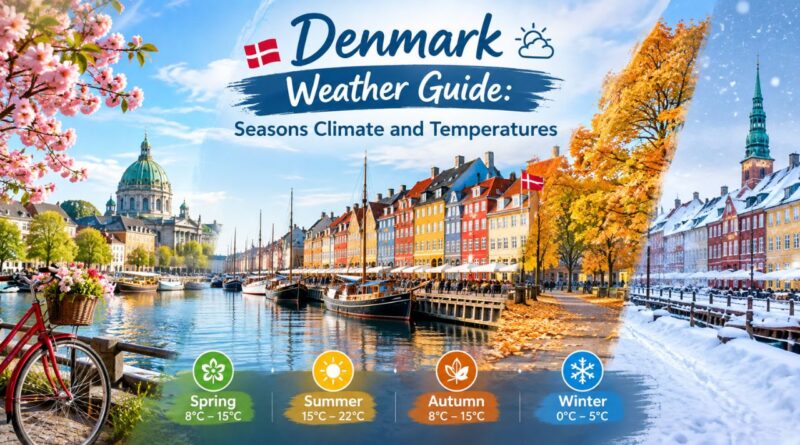
Denmark Weather Guide: Seasons Climate and Temperatures
Planning a trip to Denmark? Understanding the weather can make a surprisingly big difference to your experience. Denmark may be a relatively small country but its weather has plenty of personality. One moment the sky can be bright and inviting. A few hours later you may find yourself reaching for a jacket.
The good news? Denmark’s climate is generally moderate rather than extreme. Summers are usually comfortable. Winters are chilly. Rain can appear throughout the year. If you know what to expect packing and planning become much easier.
Whether you’re wondering about the best season to visit researching temperatures or deciding what to do in Copenhagen Denmark this guide walks you through Denmark weather month by month and season by season.
Understanding Denmark’s Climate
Denmark has a temperate maritime climate. It is largely influenced by the surrounding North Sea and Baltic Sea. This helps keep temperatures from becoming excessively hot or brutally cold for long periods.
You can expect relatively mild summers and cool winters. Changeable conditions are one of the country’s defining weather features. Cloudy skies sunshine drizzle wind and rain can sometimes make appearances on the same day.
How Geography Shapes Denmark Weather
Denmark consists of the Jutland Peninsula and numerous islands. Its position between the North Sea and Baltic Sea means the ocean has a major influence on local conditions.
Coastal areas can feel particularly windy. Inland locations may experience slightly greater temperature differences. Copenhagen is located on Zealand and often has weather that feels distinctly maritime. Parts of Jutland can experience their own local variations.
Denmark’s Daylight and Seasonal Changes
Daylight is another important part of the Danish experience. Summer brings remarkably long days while winter has short daylight hours.
This is more than just a weather detail. It can influence your entire travel schedule. In summer you can comfortably explore attractions late into the evening. In winter you will want to organize outdoor sightseeing around the limited daylight.
Denmark Weather in Spring
Spring is when Denmark begins shaking off winter. March can still feel cold but April and May gradually become brighter and more pleasant.
Temperatures generally rise throughout the season. However warm afternoons are not guaranteed. Spring weather can be unpredictable so layers are your best friend.
March Temperatures
March often feels like a transition month. Cold winds and chilly mornings are possible. Sunny afternoons can provide a welcome taste of spring.
If you’re visiting in March bring a warm jacket and waterproof footwear. Do not assume that the arrival of spring means consistently warm weather.
April and May Weather
April usually brings milder conditions while May is often considerably more pleasant. Flowers bloom. Parks become livelier. Outdoor cafés gradually fill with visitors.
May can be an excellent compromise for travelers who want comfortable sightseeing without the peak summer atmosphere.
Denmark Weather in Summer
Summer is arguably the easiest season for first time visitors. June July and August generally offer Denmark’s warmest conditions and longest days.
Temperatures are usually comfortable rather than tropical. That makes summer particularly appealing if you want to walk around cities cycle explore castles or spend time near the coast.
June Temperatures and Conditions
June brings long daylight hours and increasingly warm weather. The combination of mild temperatures and extended evenings is perfect for sightseeing.
You can spend the morning exploring a historic neighborhood. Enjoy lunch outdoors and still have plenty of daylight left for an evening walk.
July and August Weather
July is typically among the warmest months while August remains pleasantly mild. However summer showers can still occur.
That’s why a lightweight waterproof jacket is useful even during summer. Think of Danish summer weather as a flexible travel companion. It is usually pleasant but never entirely predictable.
What to Pack for a Danish Summer
Pack lightweight clothing comfortable walking shoes sunglasses and a light rain jacket. Layers are useful because mornings and evenings can feel cooler than sunny afternoons.
If you’re planning coastal excursions add something wind resistant. The breeze near the water can make a warm day feel surprisingly cool.
Denmark Weather in Autumn
Autumn gradually turns Denmark cooler and darker. September can still feel relatively mild while October and November become noticeably chillier.
The season brings colorful foliage and a cozy atmosphere particularly in Denmark’s historic towns and cities.
September and October Conditions
September can be a fantastic month for sightseeing. Temperatures are generally cooler than in summer but outdoor exploration can still be comfortable.
By October rain wind and cooler evenings become more common. A waterproof outer layer becomes increasingly valuable.
November Weather
November often feels distinctly wintry. Days are shorter temperatures drop and cloudy or rainy conditions can dominate.
It’s a good month for museums cafés galleries and other indoor attractions. Denmark’s cozy atmosphere feels rather appropriate when the weather turns gray.
Denmark Weather in Winter
Winter in Denmark is cold dark and often windy. However it is not necessarily extreme. Snow can occur although persistent heavy snow is not guaranteed throughout the season.
December has a special appeal because of Denmark’s Christmas traditions illuminated streets and cozy interiors.
December Weather and Christmas Atmosphere
December tends to be chilly and daylight is limited. However Christmas markets lights and warm cafés give the season a distinctive charm.
If you’re interested in things to do in Copenhagen Denmark winter offers a different perspective on the capital. Instead of spending every hour outdoors you can combine sightseeing with museums historic buildings cafés and seasonal events.
January and February Temperatures
January and February are generally among Denmark’s coldest months. Freezing temperatures can occur and strong winds can make conditions feel colder than the thermometer suggests.
Snow is possible but weather can vary considerably from one winter to another.
Snow Wind and Winter Clothing
A warm waterproof coat is essential for winter travel. Add gloves a scarf warm socks and waterproof shoes or boots.
Layering works particularly well. Rather than relying on one extremely heavy garment combine several practical layers that you can remove when you move indoors.
Best Time to Visit Denmark
So when should you visit? It depends on what kind of trip you want.
For pleasant outdoor sightseeing and long days June through August is a strong choice. For fewer crowds and mild conditions May and September can be appealing alternatives.
Winter works well if you’re attracted to Christmas scenery cozy interiors and cultural experiences rather than long outdoor days.
Weather for Outdoor Activities
Summer and late spring are especially convenient for cycling walking photography and coastal exploration.
Autumn can be beautiful for scenic walks while winter is better suited to shorter outdoor excursions combined with indoor attractions.
Weather for Exploring Copenhagen
Copenhagen is enjoyable in every season but your itinerary should match the weather.
On a sunny summer day you can comfortably explore neighborhoods on foot cycle around the city and spend time beside the harbor. On a wet winter afternoon museums galleries historic sites and cafés become much more attractive.
If you’re researching what to do in Copenhagen Denmark do not build an itinerary that depends entirely on sunshine. Keep a few indoor alternatives ready.
Weather Differences Across Cities in Denmark
Although Denmark is small weather can vary between regions. This matters when you’re planning trips across the country.
There are many fascinating cities in Denmark Europe travelers can explore including Copenhagen Aarhus Odense and Aalborg. Each provides a slightly different travel experience.
Copenhagen and Eastern Denmark
Copenhagen’s coastal location means wind can be noticeable especially around open waterfront areas. Summers are generally comfortable while winters can feel colder because of wind exposure.
The city is well prepared for changing weather. Visitors can easily shift between outdoor and indoor activities.
Aarhus and Jutland
Aarhus and other parts of Jutland can experience somewhat different local conditions from Copenhagen. Coastal exposure is important and windy or rainy days are always possible.
If you’re traveling around Jutland check the forecast shortly before heading out rather than relying solely on seasonal averages.
What Denmark Weather Means for Travelers
The biggest lesson is simple. Do not pack for an entire season based on temperature alone.
Rain and wind can dramatically change how a day feels. A mild temperature with strong wind may feel colder than expected while a sunny day can feel wonderfully warm.
A flexible wardrobe and adaptable itinerary will serve you much better than trying to predict every hour.
Things to Do in Copenhagen Denmark by Season
In summer prioritize outdoor experiences harbor walks parks cycling and long evening strolls.
Spring is excellent for gardens architecture and relaxed city exploration. Autumn is ideal for combining scenic walks with cafés and cultural attractions. Winter favors museums historic interiors shopping streets and cozy dining.
This seasonal approach makes planning easier because you’re working with the weather rather than fighting it.
Danish Cuisine for Cold and Warm Weather
Weather also changes how you experience Denmark cuisine.
On colder days traditional Danish comfort foods and warm drinks can feel especially satisfying. During warmer months lighter meals pastries open faced sandwiches and outdoor dining become particularly enjoyable.
Food is part of the travel experience after all. Why rush back indoors when the weather is pleasant enough to sit outside and enjoy a meal?
Practical Denmark Weather Packing Guide
For spring and autumn bring:
- A waterproof jacket
- Comfortable walking shoes
- Lightweight layers
- A compact umbrella
- Warm clothing for evenings
For summer bring:
- Breathable clothing
- Comfortable shoes
- Sunglasses
- A light sweater
- A rain jacket
For winter bring:
- A warm waterproof coat
- Gloves and scarf
- Warm socks
- Waterproof footwear
- Multiple insulating layers
The golden rule is flexibility. Denmark weather can change quickly so your suitcase should be ready for more than one type of sky.
Conclusion
Denmark weather is best described as mild maritime and changeable. Summers are comfortable and bright. Spring brings gradual warmth. Autumn creates a colorful transition. Winter delivers cold temperatures with short days and a cozy atmosphere.
The trick is not to wait for perfect weather. Instead plan intelligently around the conditions. Bring layers expect some rain keep your itinerary flexible and embrace the Danish atmosphere in every season. Whether you’re exploring Copenhagen discovering other cities sampling Denmark cuisine or planning outdoor adventures knowing what the weather can bring will help you enjoy the country with far fewer surprises.
FAQs
Q1. Is Denmark Very Cold in Winter?
Denmark can be quite cold in winter particularly when wind and damp conditions are present. However temperatures are generally moderated by the surrounding seas so extreme cold is not the norm for long periods.
Q2. What Is the Warmest Month in Denmark?
July is typically one of Denmark’s warmest months. August can also provide pleasant summer conditions while June offers the advantage of exceptionally long daylight hours.
Q3. Does It Rain a Lot in Denmark?
Rain can occur throughout the year. Rather than having one completely dry season Denmark experiences changeable precipitation across the calendar. A waterproof jacket is therefore useful regardless of when you visit.
Q4. What Is the Best Month to Visit Denmark?
May June July August and September can all be excellent choices depending on your priorities. Summer is best for long days and outdoor activities while May and September can offer a pleasant balance between weather and atmosphere.
Q5. What Should I Wear in Denmark?
Wear layers and choose practical clothing. Comfortable waterproof shoes and a rain resistant jacket are especially useful. In winter add warm layers gloves and a scarf.