
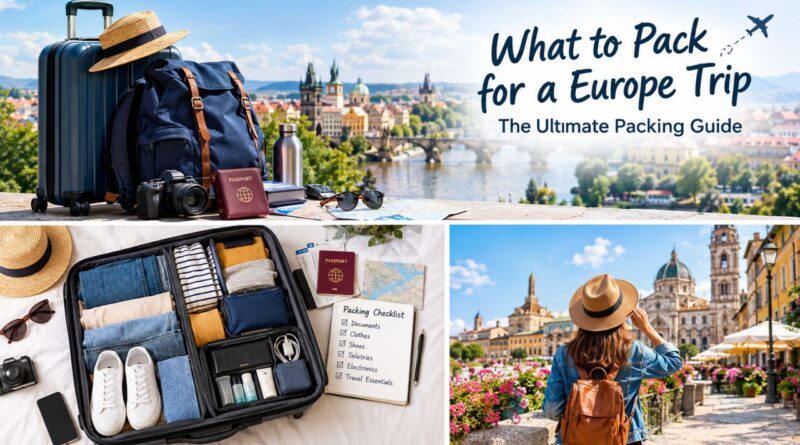
What to Pack for a Europe Trip: The Ultimate Packing Guide
Planning a trip to Europe is exciting but deciding what to pack for a Europe trip can quickly become overwhelming. From exploring historic cities and enjoying local cuisine to visiting beaches mountains and museums Europe offers a wide range of experiences. Each destination can also have different weather and travel requirements.
The best approach is to pack light smart and according to your itinerary. Here’s a practical Europe travel packing list to help you prepare for a comfortable and stress-free journey.
1. Essential Travel Documents
Keep all important documents organized and easily accessible. Consider carrying both physical and digital copies.
- Passport and required visa
- Flight and hotel confirmations
- Travel insurance documents
- Driving licence or international driving permit if required
- Copies of identification documents
- Emergency contact details
- Credit or debit cards and some local currency
A small travel document organizer can be helpful when moving between different European countries.
2. Comfortable Clothing
Europe often involves a lot of walking so comfortable and versatile clothing is essential. Choose items that can be mixed and matched.
Pack:
- T-shirts and casual tops
- Jeans or comfortable trousers
- Lightweight layers
- Sweater or cardigan
- Jacket or waterproof outer layer
- Underwear and socks
- Sleepwear
- One smart-casual outfit
Avoid taking too many outfits. Neutral colours and versatile pieces allow you to create different looks without overpacking.
3. Comfortable Shoes
Good walking shoes are among the most important items on your Europe packing list. Many European cities are best explored on foot and cobblestone streets can be challenging.
Consider packing:
- Comfortable walking shoes or sneakers
- Sandals for warmer destinations
- Optional dress shoes for special occasions
Wear your heaviest shoes while travelling to save space in your luggage.
4. Weather-Specific Items
European weather can vary considerably depending on the country season and region. Check the forecast for each destination before packing.
For cold weather:
- Warm jacket
- Thermal layers
- Scarf gloves and hat
- Warm socks
For summer:
- Lightweight clothing
- Sunglasses
- Sun hat
- Sunscreen
- Reusable water bottle
For rainy weather:
- Compact umbrella
- Waterproof jacket
- Water-resistant shoes
Layering is especially useful because temperatures can change throughout the day.
5. Toiletries and Personal Care
Travel-size toiletries can save valuable luggage space. Pack the essentials rather than bringing full-size products.
Your toiletry bag can include:
- Toothbrush and toothpaste
- Shampoo and conditioner
- Face wash and moisturizer
- Deodorant
- Sunscreen
- Basic skincare products
- Hairbrush or comb
- Personal medication
Keep essential medication in your carry-on luggage.
6. Electronics and Travel Accessories
A few useful gadgets can make travelling around Europe easier.
Pack:
- Smartphone
- Phone charger
- Universal travel adapter
- Power bank
- Headphones or earbuds
- Camera if needed
- Tablet or e-reader
A universal travel adapter is particularly useful if your itinerary includes several countries.
7. Day Bag and Everyday Essentials
A lightweight backpack or crossbody bag is ideal for sightseeing. Keep your daily essentials within easy reach.
You may want to carry:
- Phone and wallet
- Passport when necessary
- Water bottle
- Sunglasses
- Portable charger
- Small umbrella
- Tissues or hand sanitiser
- Snacks
Choose a secure bag especially when visiting busy tourist areas.
8. Smart Packing Tips for Europe
Travelling light can make your European holiday much easier. Trains buses stairs and narrow hotel entrances can be difficult to navigate with oversized luggage.
Follow these simple tips:
- Choose lightweight luggage with sturdy wheels.
- Pack clothes that can be used for multiple occasions.
- Roll or fold clothing efficiently.
- Leave some space for souvenirs.
- Keep valuables and important documents in your carry-on.
- Check airline baggage restrictions before departure.
- Pack according to your itinerary rather than preparing for every possible situation.
Final Thoughts
Knowing what to pack for a Europe trip can make your journey more comfortable and enjoyable. Focus on versatile clothing comfortable footwear essential documents weather-appropriate layers and useful travel accessories.
Most importantly avoid overpacking. Having less luggage makes it easier to travel between European cities and gives you more freedom to enjoy your holiday. With a well-planned packing list you can spend less time worrying about your suitcase and more time discovering Europe’s incredible culture food history and landscapes.
FAQ
Q1. What should I pack for a 2-week trip to Europe?
For a two-week Europe trip focus on versatile clothing rather than packing 14 separate outfits. Around 7 to 10 days of clothing comfortable shoes toiletries electronics travel documents and weather-appropriate layers are usually enough if you plan to do laundry during the trip.
Q2. What type of shoes should I take to Europe?
Comfortable walking shoes or sneakers are the best choice. European cities often involve extensive walking public transportation and uneven or cobblestone streets. Choose shoes that are already broken in.
Q3. Should I pack a suitcase or a backpack for Europe?
It depends on your itinerary. A lightweight suitcase with wheels works well for traditional city trips while a travel backpack can be more convenient if you plan to move frequently between destinations.
Q4. Do I need a travel adapter for Europe?
Yes you may need one depending on your home country and the European destinations you visit. A universal travel adapter is a convenient option for multi-country trips.
Q5. What should I keep in my carry-on for a Europe trip?
Keep your passport travel documents wallet medications phone charger power bank valuables and one change of clothes in your carry-on. This ensures that your essentials remain accessible if your checked luggage is delayed.
Q6. How can I avoid overpacking for Europe?
Create a packing list based on your itinerary and expected weather. Choose clothes that can be mixed and matched limit the number of shoes use travel-size toiletries and leave extra room in your luggage for purchases.